


Just a few years ago, electric vehicles felt like a futuristic promise. Today, they are a global reality, and Chile is rapidly adopting them—most recently evidenced by Copiapó becoming the country's first city with a 100% electric public transport system. While this technology represents a vital, cleaner alternative to traditional fuel, this shift to electromobility simultaneously creates new, complex environmental challenges that current systems are not yet equipped to handle.
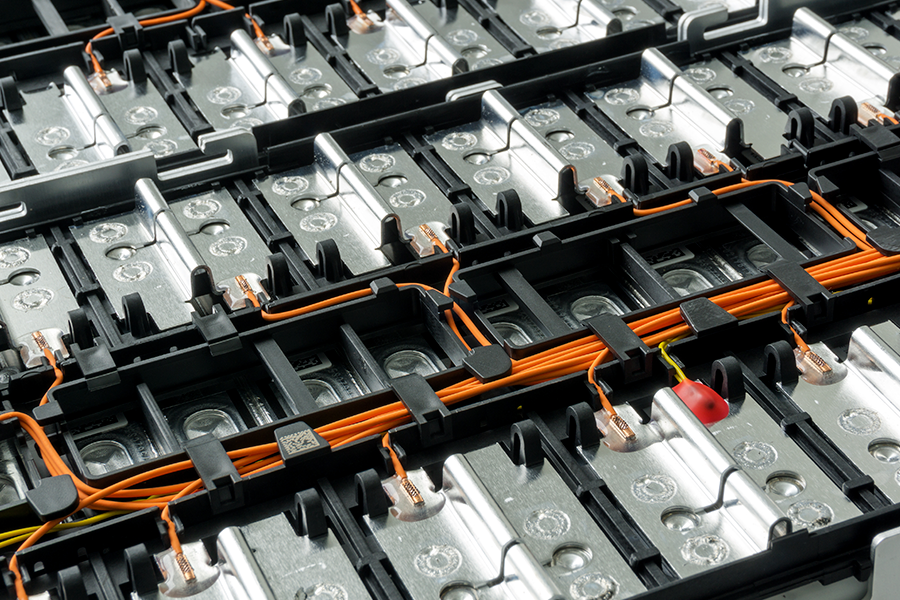
The core challenge arises from lithium-ion batteries, which are essential to modern electric vehicles. While their operations are low-emission, their production requires critical metals. This designation is due not only to their strategic role in the global energy transition but also to the resource constraints posed by their limited availability and high concentration in specific regions. The primary critical metals include cobalt, nickel, manganese, and lithium.
Moreover, the end-of-life management of lithium-ion batteries presents a major hurdle, as their operational lifespan is limited to between 8 and 12 years. Depleted batteries constitute complex waste streams resistant to simple treatment. Current recovery methods face significant limitations, including high operating costs and reliance on established processes that utilize toxic solvents, thereby introducing further environmental and health risks.
A Clean, Efficient, and Sustainable Alternative
To overcome the limitations of current, toxic recycling methods, Dr. Esteban Quijada, an academic in the Department of Chemical Engineering and Bioprocesses at Usach, is spearheading a Fondecyt Regular project. This research proposes a cleaner, highly efficient, and sustainable alternative specifically designed for recovering valuable critical metals from end-of-life lithium-ion batteries.
Dr. Quijada explains the revolutionary process: “What we aim to do is take these depleted batteries and treat them using processes that do not rely on toxic solvents, but rather on ionic liquids, which are much safer. These specialized compounds allow us to work in more extreme conditions, while also enabling us to combine extraction with an electrochemical process that selectively separates metals by applying different potential differences. This allows us to avoid intermediate stages, significantly reduce waste, and obtain high-value products, such as metal alloys, directly from waste.”
The Fondecyt project is structured as a progressive four-year work plan to develop the full process. During the first year, the team is focused on fundamental selection: they are identifying ionic liquids capable of efficiently extracting metals from batteries through leaching (the controlled dissolution of the material) and through computational modeling, which involves using theoretical tools to predict which green solvents offer the best performance. This foundational work then prepares them for the next stage: the electrochemical process, where they will evaluate the precise electrical potentials required to separate each metal in a controlled and selective manner.
“Once we understand how ionic liquids behave and the precise electrical potentials we need to apply, we will move on to the final phase: integrating both processes into a single, streamlined step. This will allow us to selectively separate metals much more simply, without all the intermediate stages involved in current, complex methods. The result is not just reduced waste, but the recovery of high-value products, such as metal alloys, directly from waste.”
The final stage of the project seeks to utilize the recovered critical metals to produce high-value alloys, specifically cobalt-nickel alloys, which possess desirable properties for various industries. These alloys not only allow waste that was previously discarded to be valorized (given economic value), but also open up the possibility of manufacturing new materials with advanced applications in areas such as catalysis and thermal resistance. This step completes the transition from complex waste to a circular, high-tech resource.
“The idea is to transform waste into a final product that has high industrial value. We want to show that it is possible to close the entire cycle: to efficiently extract, purify, and transform these recovered critical metals into a functional material,” he states.
This type of technology could be a significant opportunity for companies currently engaged in electronic waste recycling or for the mining industry itself, which could diversify its sources of extraction without relying exclusively on traditional deposits. Beyond the industry, Dr. Quijada emphasizes the crucial educational dimension of the project: "It allows us to train undergraduate, master's, and doctoral students in applied clean technologies and provide them with tools that are currently in high demand in the productive sector."