


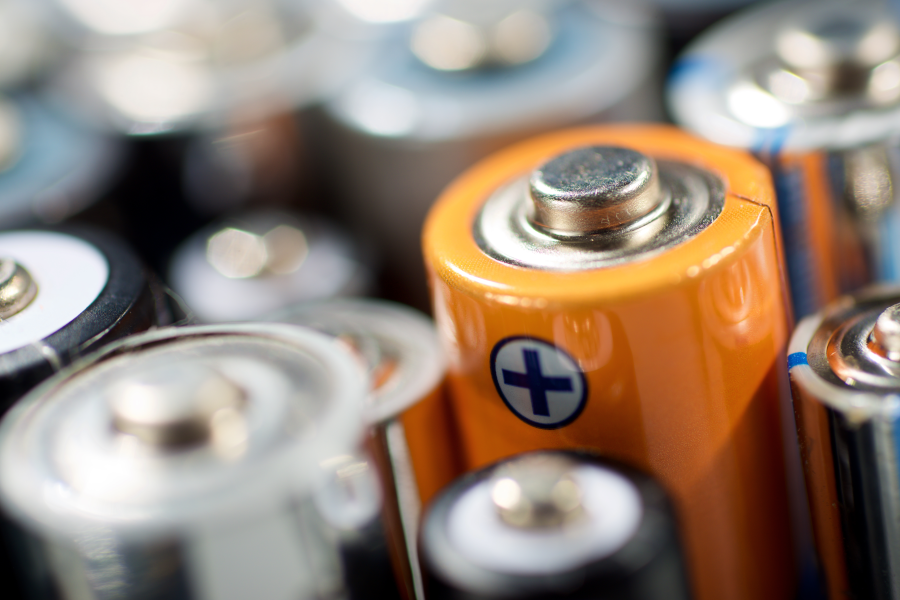
As energy transitions and technology advance, lithium-ion batteries have become the gold standard for modern energy storage. From everyday electronics to electric vehicles (EVs), their efficiency, high capacity, and long-term durability drive the future of clean power.
Lithium-ion batteries operate by transferring ions and electrons between two core components: the anode and the cathode. Together, these elements store and discharge energy. Because a battery’s overall performance, capacity, and lifespan rely heavily on these internal materials, upgrading anode and cathode components remains a top priority for battery innovation.
Today, most lithium-ion battery anodes rely on graphite carbon—a stable material with a limited storage capacity. To overcome this bottleneck, researchers are turning to silicon anodes. Silicon can store up to 10 times more energy than carbon, but it faces a major hurdle: it expands and contracts dramatically during charge cycles, leading to rapid material degradation and lost performance over time.
To solve this challenge, Dr. Rudy Martín and his research team at Usach are leveraging advanced materials chemistry. Their project focuses on developing next-generation battery components designed to boost the energy capacity and structural stability of lithium-ion batteries.
“Batteries have several parts: an anode, a cathode, a membrane, and an electrolyte. Each component is essential, and the anode is particularly crucial because that’s where energy is stored once the battery is charged. Today, that anode is made of carbon, but there’s a much more promising material—silicon—because it can store much more energy per unit of mass. The problem is that when lithium forms an alloy with silicon during charging, the volume changes significantly—it expands—and this causes the material to degrade,” says Dr. Rudy Martín.
This structural instability currently prevents silicon from replacing graphite in commercial batteries. Because batteries naturally lose capacity as internal components wear down during each charge-discharge cycle, silicon’s severe expansion accelerates this degradation—rapidly compromising overall battery lifespan, stability, and energy storage capacity.
Furthermore, in larger-scale applications, such as electric cars, a similar issue arises: while the technology is viable, the battery’s efficiency and durability remain a long-term challenge.
To overcome this limitation, the Usach team is engineering an innovative materials chemistry solution: an advanced binder. Functioning as a high-performance "adhesive," this specialized component cushions silicon's volume changes during charge cycles, preventing rapid anode degradation and preserving battery stability.
“All batteries contain a polymer—which accounts for between 5% and 10% of their total mass—called a binder. This acts like glue, holding the active materials of the electrode (where energy is stored)—which are actually particles—together and attaching them to an electronic conductor. For this to work properly, the material must be able to self-repair through successive charge-discharge cycles and be capable of cycling between 100 and 1,000 times without losing too much capacity,” explains Dr. Rudy Martín.
Over the next four years, the research team will develop and test these materials under real-world conditions. The fabrication process begins by mixing silicon with the custom-engineered polymer binder and applying it to an electron-conducting copper foil to form the anode. Researchers then assemble small coin-cell batteries (similar to watch batteries) to evaluate real-time performance, stability, and efficiency across hundreds of charge-discharge cycles.
The project also features key collaboration from Dr. Ana Lilian Montero Alejo, a co-investigator from the School of Natural Sciences, Mathematics, and the Environment at Metropolitan Technological University (UTEM). Leading the computational study of these new materials, Dr. Montero Alejo uses advanced molecular modeling and simulation tools to visualize chemical phenomena undetectable in laboratory testing. Her work unveils the precise molecular mechanisms driving the binder’s improved battery performance.
From Research to Industrial Challenge
A major strength of this research is its high potential for industrial commercialization. Unlike alternative approaches, the material relies on cost-effective components, as the binder makes up only a small fraction of the total battery volume. If testing yields positive results, this solution promises not only high performance but also manufacturing viability—paving the way for high-capacity, longer-lasting lithium-ion batteries without driving up production costs.
“Binders account for only between 5% and 10% of the total weight of the silicon electrode, so even if their cost were high, they are used in very small quantities. To put this into perspective, with just one gram of binder, it is possible to manufacture around 100 button-cell batteries. And thanks to the use of silicon as the anode, those 100 batteries could store the same amount of energy as nearly 1,000 traditional graphite-based batteries,” explains the Usach researcher.
In that sense, rather than focusing on reducing costs, the contribution of this research lies in improving battery performance over time, since incorporating these materials would allow them to hold their charge longer and require fewer recharges, which translates to greater durability and efficiency in their use, both in electronic devices and in larger-scale applications.
As home to the world’s largest lithium reserves, Chile holds a unique competitive advantage in the global energy transition. Pioneering technological innovations like the Usach binder project create key opportunities beyond raw mineral extraction—paving the way for a high-value, domestic battery manufacturing industry.
“Chile has a great opportunity in the development of lithium-related technologies, given the potential of this resource. Today, there is human capital, knowledge, and lines of research pointing in that direction; therefore, moving toward concrete applications depends on continuing to strengthen applied research and creating the necessary conditions to scale these developments, which opens up a very favorable scenario for bringing these types of initiatives to the industry,” concludes Dr. Rudy Martín.