


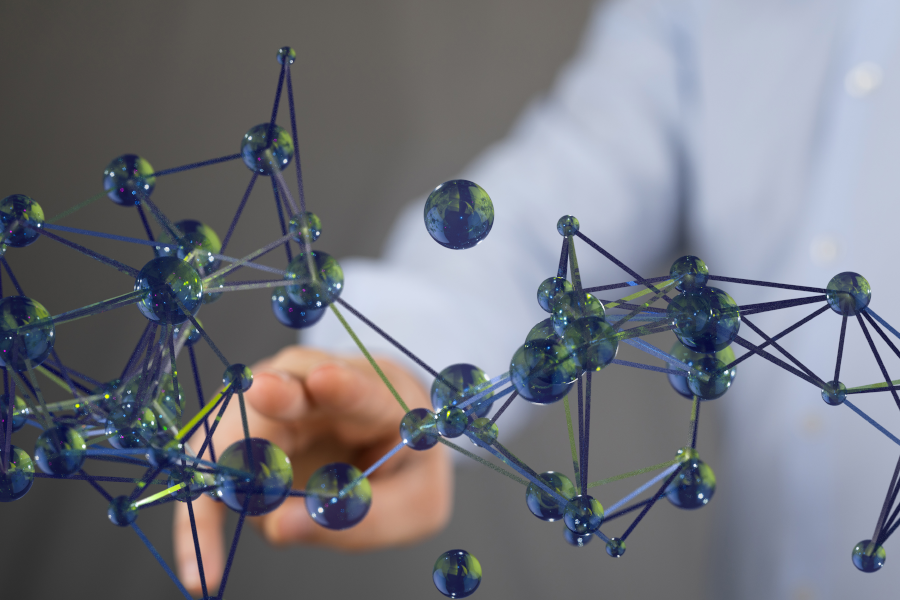
"Today, understanding the fundamental mechanisms of life requires much more than superficial observation; it demands that we deconstruct and analyze the forces governing self-organized matter at its most intimate scale. At this intersection of physics and living systems, materials science—a field historically devoted to 'hard' materials such as metals, ceramics, and polymers—provides an extraordinary methodological foundation for addressing 'soft matter,' the very substance that underpins life.
Soft matter research focuses on the properties of complex systems, including biological membranes, proteins, and molecular sensors and actuators. The goal is to decode the functional mechanisms of bacteria, cells, and even more sophisticated biological structures. This approach offers a perspective that complements biology by grounding its analysis in physical fundamentals, with a strong emphasis on reductionism and quantitative data.
To advance this frontier, researchers require tools that allow for direct physical interaction with the system under study to reveal its internal architecture. To this end, USACH was awarded a 950 million peso Fondequip Mayor grant from ANID to acquire a Field Emission Scanning Electron Microscope with a Focused Ion Beam (FESEM-FIB). This initiative is led by Dr. Francisco Melo of the Faculty of Science, an experimental physicist and director of the Soft Matter Research and Technology Center (SMAT-C)."
The ultimate goal is to generate high-fidelity three-dimensional images of nature. It is no longer enough to capture surface-level data; we must selectively 'carve' and reconstruct these structures in 3D to truly decode their inner workings.
"This equipment allows us to perform a kind of reverse engineering of the microscopic world,' explains Dr. Melo. "We can isolate a microscopic system, take it apart, and understand its mechanics. For instance, we can observe how a bacterium interacts with an antibiotic: Does the cell wall rupture? Does it weaken? Are pores formed? We can even see if DNA condenses when interacting with silver nanoparticles. With the FIB, we can perform serial sectioning to track whether nanoparticles have infiltrated a bacterium or if nanoplastics have successfully crossed the blood-brain barrier."
This acquisition represents a significant technological leap for the university. The Field Emission (FE) technology generates a highly coherent and bright electron beam—comparable to the precision of a laser—resulting in images of superior resolution.
"The true innovation lies in the Focused Ion Beam (FIB) technology," the Usach academic noted. "In everyday terms, it acts as a "second cannon" that fires ions to carve through matter at the nanoscale."
"The FESEM-FIB structure operates like a miniature laboratory for both manufacturing and analysis. The FIB acts as an atomic scalpel, capable of creating precise cross-sections or eroding a sample layer by layer. This allows researchers to 'slice' through a cell, a bacterium, or any material, capturing high-resolution images of each section. These images are then reconstructed into a complete three-dimensional model, revealing structures and information previously hidden beneath the surface.
This ability to examine matter in such detail has critical implications for nanotechnology safety. As Dr. Melo notes, understanding how new materials interact with living tissues at an early stage is vital for anticipating potential adverse effects on human health. This proactive approach aims to avoid historical scenarios like that of asbestos, which was used extensively before its dangers were understood. Consequently, this equipment will generate the fundamental scientific evidence required to guide the responsible development of new technologies before they reach widespread adoption.
Finally, the project is built upon a robust transdisciplinary collaboration network. Beyond SMAT-C and USACH, the initiative also includes institutions such as Andrés Bello University, the University of Los Andes, the University of La Frontera, the University of Valparaíso, and the Pontifical Catholic University. The proposal also links related graduate programs at the University of Concepción and the Federico Santa María Technical University, while fostering collaborations with electron microscopy centers across Chile, Latin America, Europe, and the United States."
"Instrumentation is vital to research competitiveness. It is not about acquiring equipment out of necessity alone; it is about having the collective wisdom to invest at the precise moment specific scientific questions arise—questions that can only be answered with these specialized tools. This equipment was acquired to address emerging needs in biology and soft matter that were previously beyond our reach," concluded Dr. Francisco Melo. "It also allows us to develop complementary fields, such as nanophotonics, which is essential for the detection of biomarkers and metabolites."