Enzo Borroni

How Digital Revenue Models Define Modern Journalism

The rapid digitization of society has profoundly transformed how people access information and interact with their surroundings. Today, news is consumed primarily on digital platforms and in algorithm-mediated environments, where immediacy, constant content circulation, and competition for attention have created an information landscape unrecognizable from that of a decade ago. This shift has facilitated the emergence of new players that respond directly to the logic of the internet and contemporary consumption habits.

Students Win International Award for Innovative Timber Post-and-Beam Design: BUILD THE (IM)POSSIBLE

Organized by the Italian multinational Rothoblaas, the BUILD THE (IM)POSSIBLE contest is a global platform for sustainable architecture. The competition highlights innovative timber-to-steel connectors and engineered wood solutions, such as CLT (cross-laminated timber), encouraging designers to create low-carbon footprint structures and advanced hybrid buildings.

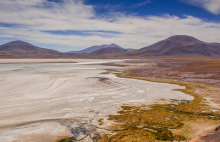
Students to use new technologies for finding the real causes of the Salar de Atacama’s decline

“Study of the sinking of the Atacama Salt Flat using synthetic aperture radar images” is the title of the study conducted by Roberto Montoya Araya and Marisol Alegría González, both students of Land/Geomatics Engineering, whose lead professor is Dr. Marcelo Caverlotti.

The record will measure the terrain of the largest salt deposit in Chile, which according to a recent study led by the University of Chile, is sinking at a rate of between 1 and 2 centimeters per year.

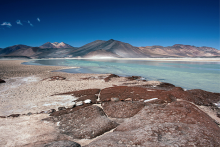
Students to use new technologies for finding the real causes of the Salar de Atacama’s decline

“Study of the sinking of the Atacama Salt Flat using synthetic aperture radar images” is the title of the study conducted by Roberto Montoya Araya and Marisol Alegría González, both students of Land/Geomatics Engineering, whose lead professor is Dr. Marcelo Caverlotti.

The record will measure the terrain of the largest salt deposit in Chile, which according to a recent study led by the University of Chile, is sinking at a rate of between 1 and 2 centimeters per year.

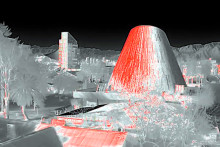
Study will use drones equipped with thermal sensors to analyze heat islands on campus

Capturing thermal images through drones that will fly over the University of Santiago de Chile, Jairo Herrera Painenao, a student of Land/Geomatics Engineering, will detect possible heat islands in our campus. 

His thesis work is entitled “Analysis of thermal images for the detection of possible heat islands at the University of Santiago de Chile”, and his guiding professor is Dr. Marcelo Caverlotti.

Study will use drones equipped with thermal sensors to analyze heat islands on campus

Capturing thermal images through drones that will fly over the University of Santiago de Chile, Jairo Herrera Painenao, a student of Land/Geomatics Engineering, will detect possible heat islands in our campus. 

His thesis work is entitled “Analysis of thermal images for the detection of possible heat islands at the University of Santiago de Chile”, and his guiding professor is Dr. Marcelo Caverlotti.