


In one of the greatest tragedies in recent UK history, a fire broke out in Grenfell Tower, a 24-story residential building in London, on June 14, 2017. The fire, which claimed 72 lives, highlighted a major crisis in building safety and led to a nationwide re-evaluation of fire safety regulations and housing standards.
The fire, caused by an electrical fault in a refrigerator, spread rapidly up the exterior of the building. The recently installed cladding, a highly flammable plastic panel, acted as a fuel, causing the flames to engulf the entire tower within hours.
The tragedy's impact was so significant that the British government banned the use of combustible materials on the exterior of residential buildings over 18 meters high. This landmark decision became a turning point, influencing building regulations both in the UK and globally.
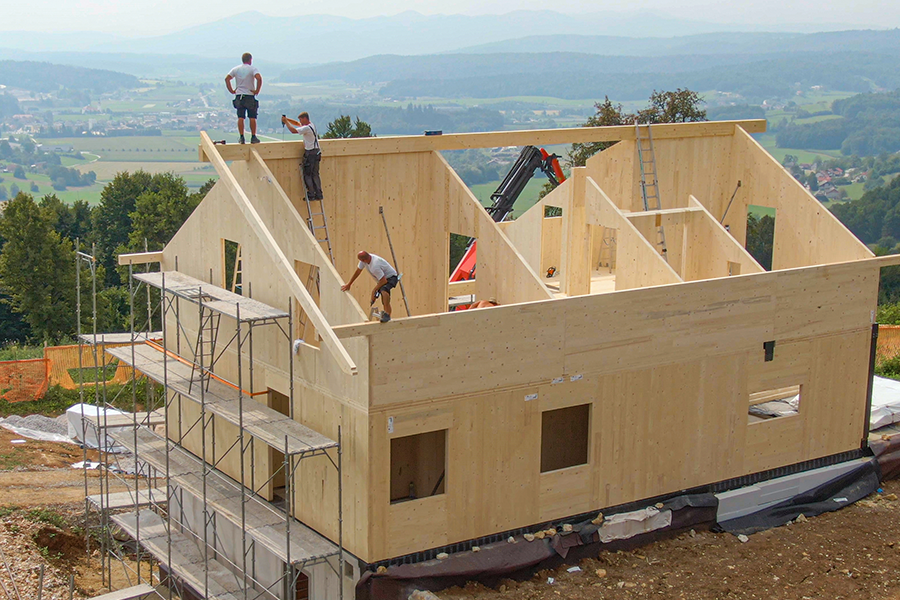
Since then, new alternatives for building construction have been sought, prioritizing safer and more sustainable materials. In this context, solid wood has gained momentum for its structural, environmental, and thermal properties. With a low carbon footprint and good thermal performance, it is increasingly seen as a viable construction material. Countries like Canada, the United States, and several in Europe have already built mid-rise structures almost entirely of wood, proving that cleaner construction can be achieved without sacrificing safety.
However, Chile has been slower to adopt wood construction. This is largely because the country's high seismic risk has made its building industry particularly conservative. This caution is compounded by a lack of local studies on how wooden structures behave in a fire. Moreover, much of the international research on the topic is not directly applicable to Chile, as it is often based on different wood species and environmental conditions.
Understanding Wood's Response to Fire
Dr. Juan Carlos Pina, an academic in the Department of Civil Engineering at USACH, is leading a Fondecyt Regular project to understand how cross-laminated timber (CLT) structures perform under fire conditions. The research, supported by the Office of Scientific and Technological Research (Dicyt-USACH), will generate the technical data needed to design safer medium-rise wooden buildings, with a focus on both structural integrity and fire protection
"When we build with reinforced concrete, the fire risk is mainly from internal elements like furniture and carpets. Once these are consumed, the fire often extinguishes itself without serious structural damage," the researcher explains. "However, when a building is made entirely of solid wood, the fuel never runs out. The walls and floors continue to feed the fire, which completely changes the scenario."
Although wood is a combustible material, solid wood has a different structural behavior when exposed to fire. Due to its thickness, it forms a charred layer on the surface as it burns. This charred layer acts as a thermal barrier, slowing the transfer of heat to the interior of the element. This process delays deterioration and helps the material maintain its structural integrity for longer.
"We know that solid wood is more fire-resistant than lighter wood elements thanks to the charred layer that forms on its surface, but what is still unclear is how long this protection lasts, how it varies with different fire conditions or building designs, and how much it affects structural strength. Therefore, we are seeking to study these factors in depth and provide technical evidence that will allow for safe design using wood," explains Dr. Pina.
To accurately model how structures behave in a fire, the team is combining experimental tests with computer simulations. They conduct laboratory tests on cross-laminated wood panels under high temperatures. They also develop numerical models that can simulate the interaction between a fire and a structure over time. This approach enables the team to study variables such as strength loss, charring speed, and the stability of structural elements, even in scenarios that are difficult to reproduce in a lab.
"We're running fire tests on cross-laminated timber panels to see exactly how they perform when exposed to fire," the academic says. "Using this data, we're building computer models that simulate their behavior. This allows us to answer critical questions, like how many layers of wood are needed to ensure the structure remains stable, or how the temperature varies within the panel. Ultimately, we want to provide solid, usable information for building safer structures."
Towards More Sustainable Construction
The research highlights the environmental benefits of using wood over concrete and steel. Unlike those materials, which have high carbon emissions from production, wood is a renewable resource that naturally stores carbon dioxide from the atmosphere as it grows. In Chile, the abundant radiata pine could be a key species for transitioning to more sustainable construction practices.
Using this type of wood in buildings would reduce the construction sector's carbon footprint and leverage a local resource with high structural potential. "If we can validate its fire performance, we could create new opportunities for the national industry, from architectural design to the manufacture of structural components, promoting more sustainable construction made in Chile," says Dr. Pina.
The four-year project involves a collaboration with FPInnovations, a leading Canadian agency in forestry technology. This partnership allows the team to incorporate international experience and advanced technical knowledge, particularly from FPInnovations' pioneering work on structural design manuals for cross-laminated timber (CLT). The project aims to develop definitive guidelines for fire-safe building design and to contribute to the creation of national regulations that will facilitate the widespread use of CLT in the country.
"In a few years, when someone in Chile thinks about building with wood, I want them to have validated, clear information right at their fingertips," says Dr. Juan Carlos Pina. "They should know exactly how many layers to use, what dimensions they need, and how to design for fire safety. This research needs to become a tangible, useful tool for the country, not just an academic paper."