


After two years of work, the closing event for the Fondef project “CuBacti, a feed additive to combat infections caused by marine pathogens affecting the salmon industry” was held. The initiative was led by Dr. Brenda Modak and researcher Dr. Mick Parra, along with a research team from the Faculty of Chemistry and Biology.
During the virtual event, researchers shared their latest progress and findings. Dr. Brenda Modak highlighted that infectious diseases pose a major threat to salmon farming in Chile. Specifically, she pointed to Flavobacteriosis as a primary danger in freshwater facilities, while identifying Piscirickettsiosis (SRS) and Tenacibaculosis as the most severe threats in marine environments.
The researcher noted that “the industry has promoted various strategies for disease management; however, many of the current solutions are limited in effectiveness and require the use of large quantities of antibiotics.” She added that the intensive use of this treatment promotes the emergence of resistant bacteria, and that contamination of the seabed and the accumulation of antibiotics affect the quality and commercial value of the production.
An Alternative for Fish Diseases
In response, the research team developed CuBacti—a functional feed additive that strengthens fish immunity against bacterial infections.
According to Dr. Brenda Modak, this development consists of a copper complex bound to a ligand derived from coumarin-type plant compounds—a combination that stably enhances copper’s antimicrobial activity. Among its main advantages is that it can be administered orally, mixed directly into feed, making it a less invasive alternative for fish.
She also noted that, in experiments—both in the laboratory and in real-world conditions—the product demonstrated high stability against variations in temperature, pH, and light exposure, maintaining its properties throughout the extrusion process used in fish feed manufacturing.
“CuBacti’s value proposition lies in the fact that it can be easily incorporated into the diets used by the industry, without requiring injections or additional procedures for administration,” she explained.
She also noted that the collaboration with Salmofood was key during the product development process. The company participated in the design and supervision of the bioassays, the formulation and preparation of the experimental diets, and also provided ongoing technical support for the day-to-day operation of the trials.
Validation Under Real-World Conditions
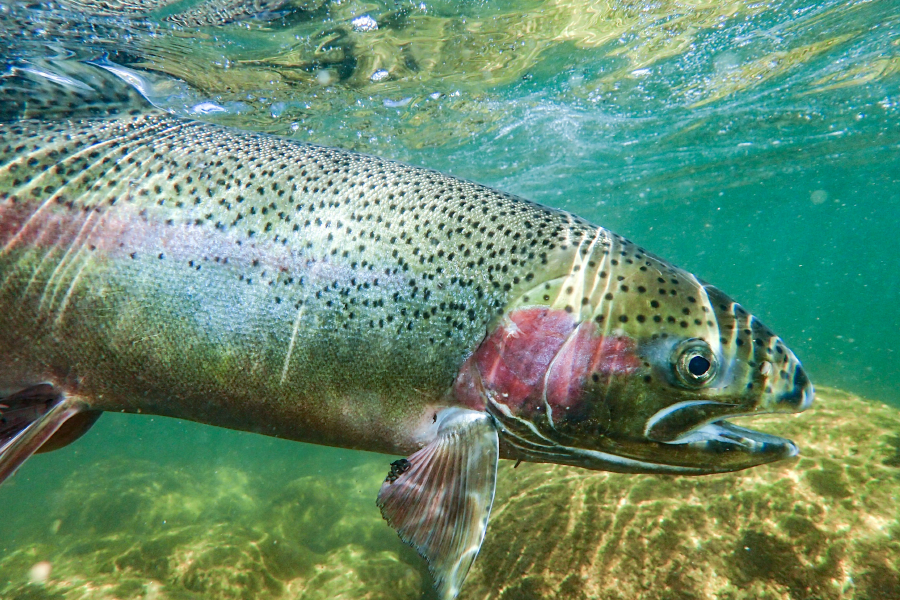
As part of the project, the team evaluated the additive’s protective effect against two of the main pathogens affecting salmon farming: Flavobacterium psychrophilum in rainbow trout and Piscirickettsia salmonis in Atlantic salmon.
Dr. Mick Parra was responsible for presenting the work and progress achieved in trials conducted in real production environments, where immunological and physiological parameters of the salmonids were analyzed.
He highlighted key findings showing that oral administration of CuBacti effectively modulates immune markers in both species. The additive boosts serum antibacterial activity and reinforces the fish's natural defense systems, among other positive outcomes.
Potential for the Aquaculture Industry
Significantly, the product is suitable for industrial-scale manufacturing, an advantage backed by Chilean trademark registration and patent protection.
“In short, CuBacti demonstrates that it is possible to develop an oral and technologically scalable alternative to help reduce the use of antibiotics in Chilean salmon farming,” stated Dr. Brenda Modak.